
Analytics without the creepy stuff.
Tinylytics counts visits, not people. There are no cookies, no fingerprinting, and no cross-site tracking. Unique hits use rotating salts so you get accurate trends while visitors stay anonymous. Everything is hosted in Germany.
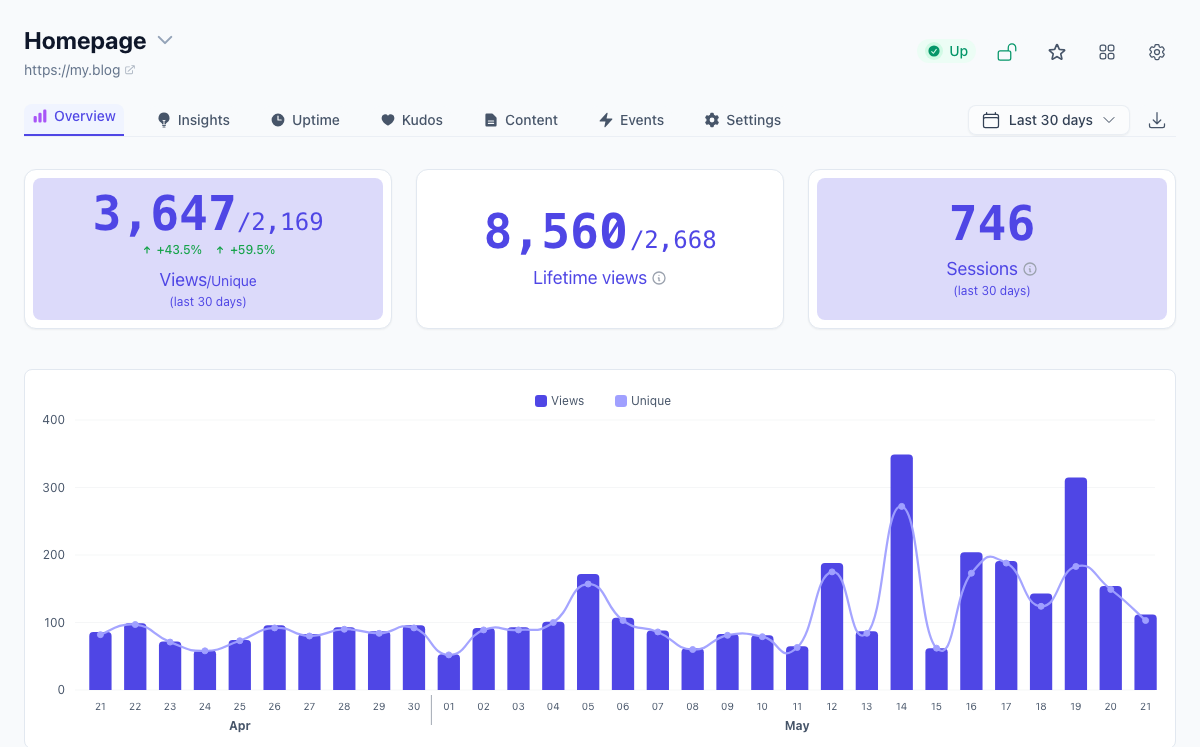
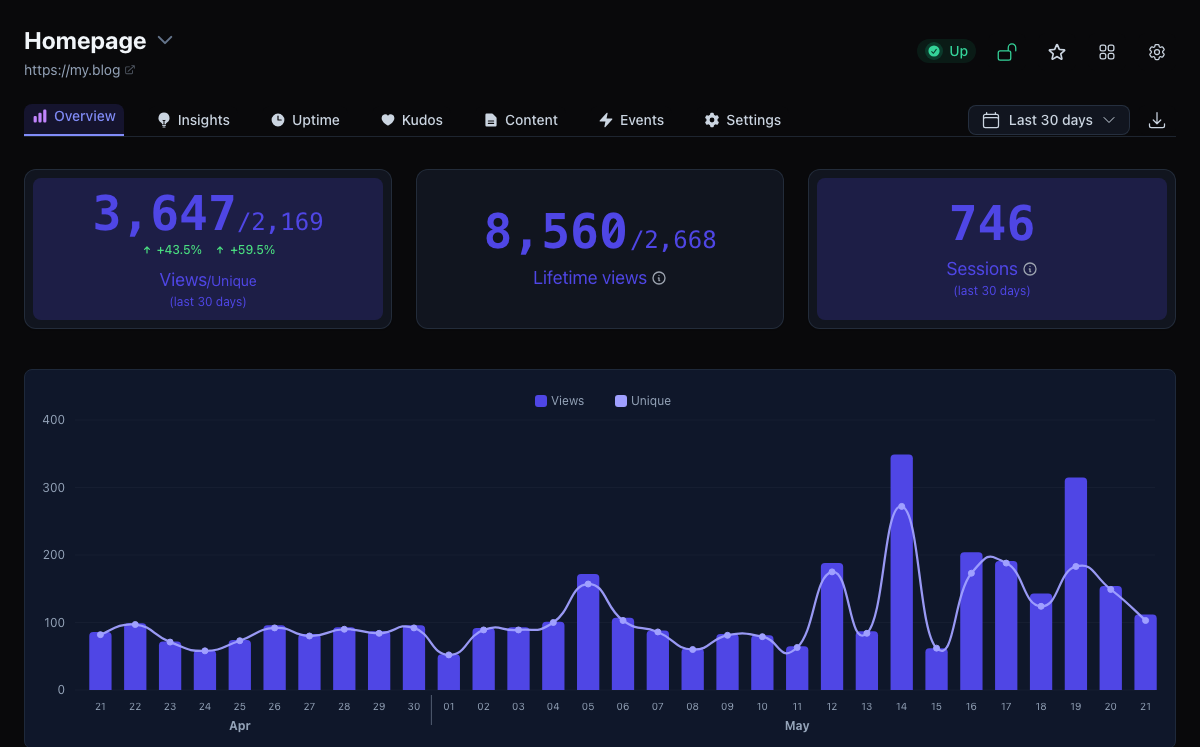
What a page view leaves behind
When someone opens a page, the script sends the page address and the referrer, and the browser sends its user agent, as every request does. The script sets no cookies. Tinylytics then stores the path and URL, the referrer, a source or campaign when the link carries one, a two-letter country code, the user agent, and two hashes.
The visitor's IP address is used along the way, for the country lookup and the hashes, but it is never saved with the hit. User agents are cleared from hits once they are four weeks old.
How unique hits are counted
There is no visitor ID, because Tinylytics never creates one. Each request becomes a one-way SHA-256 hash of the IP address, your site, the first 51 characters of the user agent, the date, and a salt that is replaced every 12 hours. While the date and the salt stay the same, one browser reading several pages counts as one visitor. Once either changes, the same person produces a different hash, so nobody can be followed from one day to the next.
The numbers are approximate on purpose. Someone who switches browsers counts twice, and several people on one connection with similar devices can count as one.
Where to read more
How we handle visitor data follows a single page view from the browser to the stored row. If you want to count clicks too, event tracking uses the same hashes as page views.